
What’s the different between a community development trust and a community council?
Community Councils
- Statutory bodies under the Local Government (Scotland) Act 1973
- Represent community views; advisory/consultative role
- Limited powers – no binding decisions
- Members are volunteers, elected or co-opted
- Funded by small local authority grants
- Examples: commenting on planning, lobbying, representing concerns
Community Development Trusts
- Independent organisations (charity or company limited by guarantee)
- Deliver projects; own and manage assets
- Significant powers – can buy land, employ staff, run enterprises
- Membership open to residents; trustees elected
- Funding from grants, fundraising, trading, income from assets
- Examples: managing centres, renewable energy, land ownership
| Feature | Community Council | Community Trust |
| Legal basis | Statutory under Local Government (Scotland) Act 1973 | Independent (charity or company) |
| Main Role | Represent views, advisory | Deliver projects; own assets |
| Power | Limited – no binding decisions | Significant – can buy land & run enterprises |
| Membership | Volunteers, elected/co-opted | Open to residents; trustees elected |
| Funding | Small local authority grants | Grants, fundraising, trading income |
| Examples | Planning consultations, lobbying | Community centres, land ownership |
| Relationship to government | Statutory consultee | Independent, no statutory role |
| Focus | Representation & influence | Action & delivery |
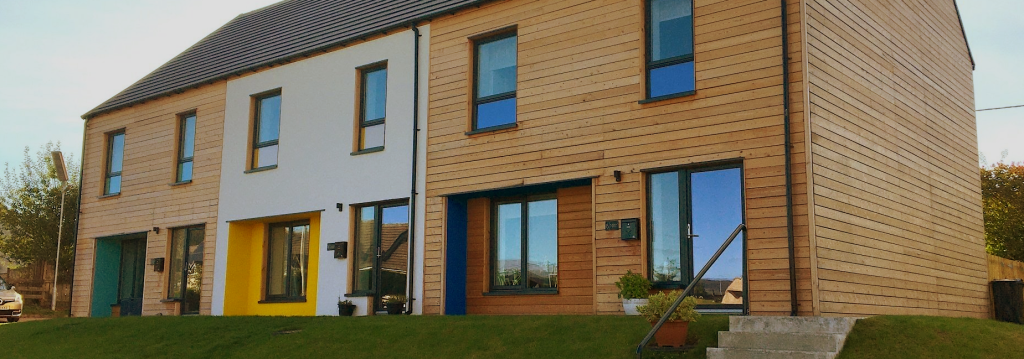
NVLT Current Assets
- Five affordable homes for rent including three award-winning PassivHaus Homes
- The Community Field (formerly the primary school playing field/Gala field)
- A Roundhouse
- Community Orchard (leased from Church of Scotland until 2042)
- Village shop/café/hub
- Five community Defibrillators
- A fleet of e-bikes
- A bike library